Fantasy Football 101
How to set up fantasy football league: step-by-step
Set up a fantasy football league without making it a second job. Use this checklist for teams, scoring, draft format, waivers, trades, and rules.
By Mike Yan · June 3, 2026 · 8 min read
Field notes from the Fantasy Butler desk.
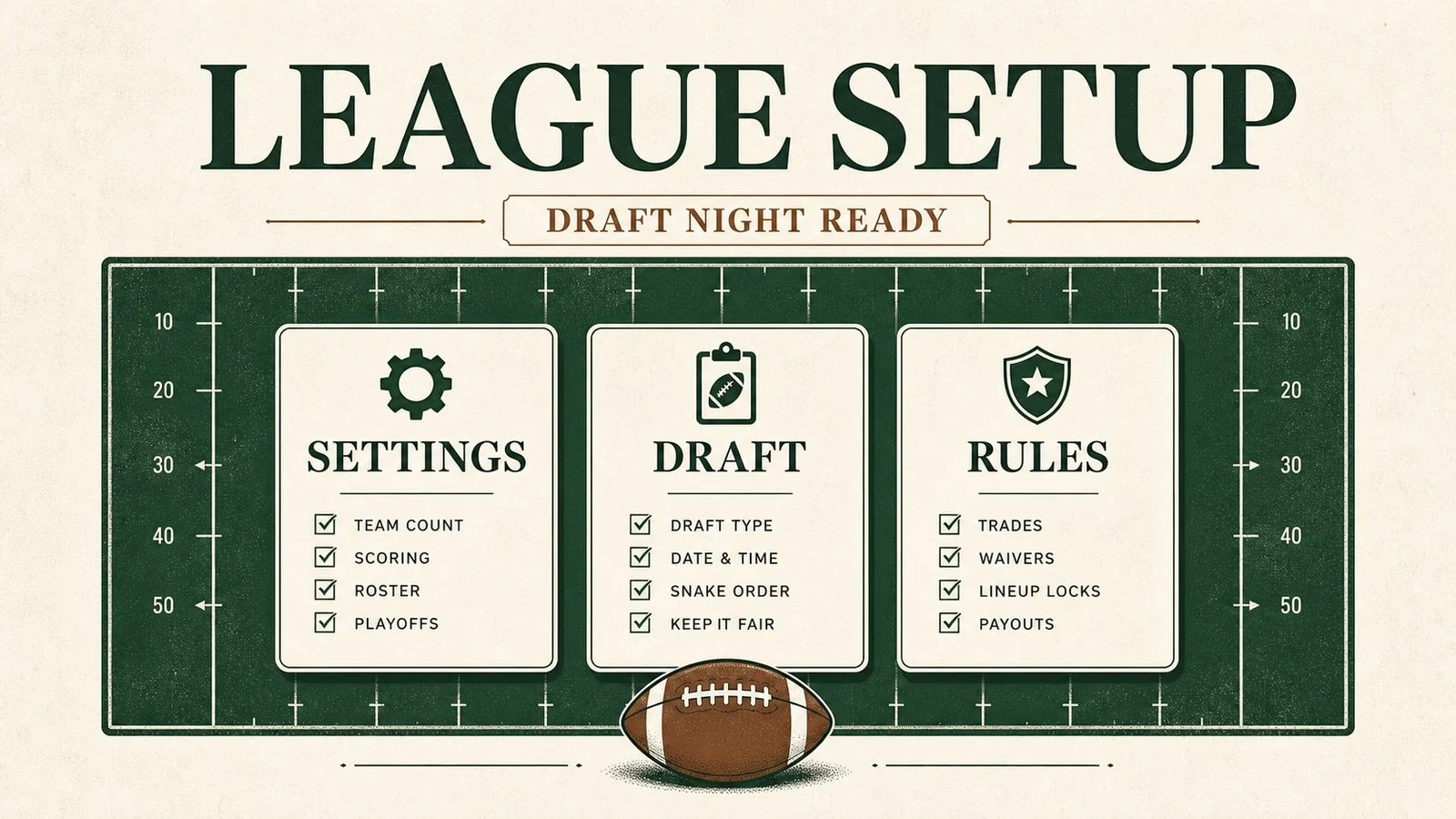
To set up a fantasy football league, pick a platform, choose 10 or 12 teams, use a simple scoring format, schedule a snake draft, set waivers and trades, then write the rules down before draft day. That is the clean version.
The part that makes leagues fall apart is not the create button. It is the settings nobody understood, the draft time half the office could not make, and the waiver rule that turns October into a second job.
The quick setup checklist
If this is a first office league, family league, or beginner league, keep the setup boring. Boring is underrated. It lets the league become fun before it becomes administrative.
| Decision | First-year setting | Why |
|---|---|---|
| Teams | 10 or 12 | Enough depth to feel real without forcing every manager into weekly panic. |
| Scoring | Half-PPR or full PPR | Easy to find rankings, easy to explain, friendly to beginners. |
| Draft | Snake draft | Everyone understands turns. Auction drafts are better once the room is ready. |
| Rosters | Standard starters plus 5-7 bench spots | Enough room for injuries and bye weeks without hoarding. |
| Waivers | Weekly waivers, simple priority or FAAB | Pick one system and explain it before the draft. |
| Trades | Commissioner review only for clear abuse | Do not let hurt feelings become league policy. |
| Playoffs | Four or six teams | Make the regular season matter. |
The goal is to keep the league alive, not prove the commissioner can operate a derivatives desk.
Pick a platform and league size
Start with the platform your managers will actually open. ESPN, Yahoo, NFL Fantasy, and Sleeper can all run a normal football league. The differences matter, but the first rule is simpler: if half the league already uses one app, use that app.
ESPN’s create-league support flow asks for the basics: league name, number of teams, scoring preference, draft preference, and draft date or time. ESPN’s creation page exposes even team counts from 4 through 20 and a PPR or no-PPR scoring choice. NFL’s settings documentation also lists custom leagues from 4 through 20 teams, even numbers only, with 10 teams as the default.
For a new league, choose 10 or 12 teams. Ten teams keeps rosters stronger and makes the waiver wire more forgiving. Twelve teams feels closer to the default competitive fantasy experience. If your league exists mainly for work, friendship, or family trash talk, 10 teams is fine.
Use scoring rules people can draft from
Scoring is the first setting that changes everything. It decides which players matter, which rankings sheet to use, and how much weekly work the roster will create.
For a beginner league, use half-PPR or full PPR. Half-PPR gives each catch 0.5 points. Full PPR gives each catch 1 point. Both are common enough that every major fantasy site publishes matching rankings. If you want the deeper breakdown, read the scoring guide before you draft: fantasy football scoring.
Avoid exotic bonuses in year one. First downs, long-touchdown bonuses, tight-end premium, six-point passing touchdowns, and heavy defense scoring can be fun in a veteran league. They also make the draft harder to explain.
The right first-year rule is not “perfect.” The right rule is one your least experienced manager can understand in five minutes.
Choose a draft format and time
Use a snake draft unless the whole room wants an auction. In a snake draft, the order reverses every round: pick 1.01 waits until 2.10 in a 10-team league, then picks again at 3.01. It is simple, fast, and familiar. If you need help with the format itself, use the snake draft strategy guide before draft night.
Auction drafts, also called salary-cap drafts, are more strategic. They are also longer and less forgiving. If your league has three first-timers and one guy who listens to four fantasy podcasts, do not give the podcast guy an auction room in year one.
Schedule the draft for the people most likely to disappear, not the people most likely to show up. The most intense managers will adapt. The reluctant coworker will not. If the league’s social value matters, pick a time that gives the weakest manager a real chance to be present.
Write down these draft rules before invites go out:
- Draft format
- Draft date and time
- Draft order method
- Timer length per pick
- What happens if someone misses the draft
- Whether trades are allowed during the draft
Do not make these decisions in the group chat 20 minutes before the first pick.
Set rosters, waivers, and trades
Roster settings decide how much work each manager buys for the season. A normal football setup looks like one quarterback, two running backs, two wide receivers, one tight end, one flex, one kicker, one defense, and five to seven bench spots. You can add injured reserve if the platform supports it cleanly.
Yahoo’s default fantasy football settings list head-to-head points and a maximum roster size of 15 for default leagues. That is a useful sanity check. You can change the exact shape, but if your first-year league needs a 24-man roster and three flex spots, ask why.
Waivers need the same restraint. Simple waiver priority is easiest. FAAB is better if the league wants managers to bid from a season-long budget, but it adds one more concept to explain. If you use FAAB, write the budget and processing days into the rules.
Trades should be allowed. They keep people engaged. But veto systems can get ugly fast. The cleanest rule for a casual league is commissioner review for collusion or obvious abuse, not “I dislike this trade.” The league needs fairness. It does not need a weekly courtroom.
Write the rules before the draft
The commissioner does not need a constitution. The commissioner needs one short note everyone can find.
Include:
- Platform and league name.
- Team count.
- Scoring format.
- Roster settings.
- Waiver format and processing schedule.
- Trade deadline and review rule.
- Playoff size and weeks.
- Dues and payout structure, if money is involved.
- What happens to abandoned teams.
- How rule disputes get decided.
That last pair matters. Every league thinks abandoned teams are a future problem until Week 8, when one inactive manager starts injured players against half the playoff race. If your office league wants to avoid that, say the rule early. Does the commissioner set an inactive lineup? Does the team get locked? Does the league use a replacement manager?
Fantasy Butler has a whole page on the abandoned-team problem because it is one of the easiest ways a casual league turns sour: fantasy football zombie owners. Setup is where you prevent it. The season is where you pay for ignoring it.
Match the setup to the kind of league you want
There is no universal best fantasy football league setup. There is only the setup that matches the room.
For an office league, use 10 teams, half-PPR, snake draft, simple waivers, and a short written rule note. Keep the stakes low enough that new managers can learn without feeling trapped. If someone is terrified of being the league Taco, make the league easier to enter.
For a beginner league, use 10 or 12 teams, full PPR or half-PPR, and a normal roster. Link everyone to a basic rules page before the draft. The fantasy football beginner setup should make the first season feel manageable.
For a more competitive home league, add FAAB, a deeper bench, and maybe a six-team playoff. But add complexity on purpose. Every extra rule creates more weekly decisions. Some leagues want that. Some leagues just want football, a group chat, and a reason to care about the late game.
For a league where nobody wants fantasy to become a second job, build around low-maintenance defaults. That is the honest answer. A good setup does not remove competition. It removes dumb friction.
FAQ
How do I set up a fantasy football league?
Choose a platform, create the league, select the number of teams, pick a scoring format, set the draft date, configure rosters and waivers, invite managers, and write down the rules before draft day. Keep the first setup simple unless everyone in the league wants advanced rules.
How many teams should a beginner fantasy football league have?
Use 10 or 12 teams. Ten teams is easier for beginners because the waiver wire stays deeper. Twelve teams is the standard competitive feel. Avoid odd team counts because they can create scheduling headaches.
What scoring format should a new league use?
Use half-PPR or full PPR. Both are common, easy to explain, and supported by plenty of rankings. Avoid heavy bonuses or unusual scoring in year one unless the league already knows what it wants.
Should beginners use a snake draft or auction draft?
Beginners should usually use a snake draft. It is faster, easier to understand, and easier to prepare for. Auction drafts are excellent for experienced leagues, but they require more pricing knowledge and more attention from every manager.
What rules should every fantasy football league write down?
Write down team count, scoring, rosters, waivers, trades, playoffs, dues, payouts, draft order, and abandoned-team policy. If money is involved, write the payout structure before anyone pays.
Closing
A good fantasy football league is not built by adding every possible rule. It is built by making the right few decisions early, writing them down, and keeping the season from turning into admin work.
Once the league is created, send one message with the draft time, invite link, scoring, rosters, waivers, trades, playoffs, and abandoned-team rule. Then stop tinkering. If a rule is wrong, fix it before the draft or agree to change it next season.
If you want the in-season work handled after draft night, Fantasy Butler is built for the next problem: an AI fantasy football manager that handles lineups, waivers, FAAB, injury swaps, and the small weekly chores that make fantasy feel like a second job.
The Fantasy Butler Team
A small desk focused on fantasy operations, time back, and the work of making every roster move happen on schedule.